

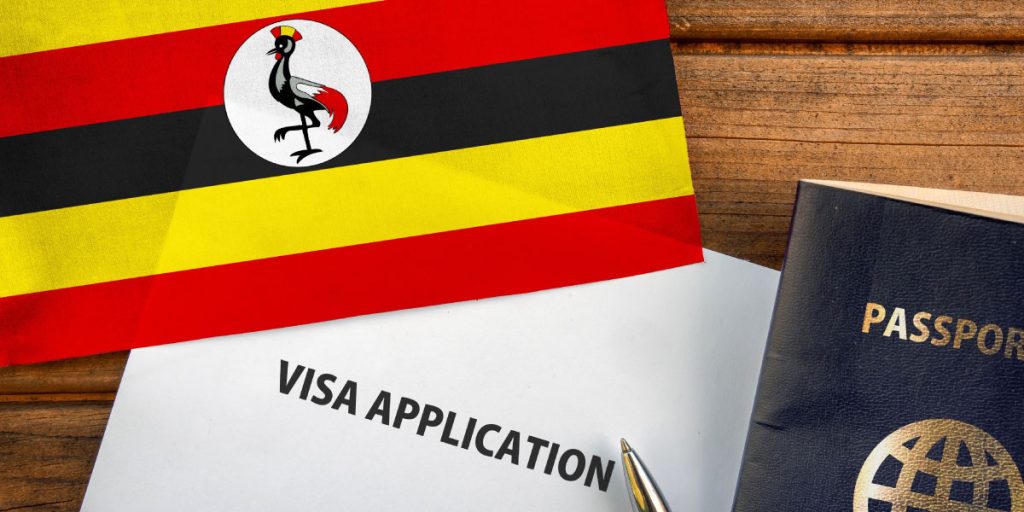
Uganda has quietly redrawn its borders not by closing them, but by choosing who walks through freely. In a new policy shift, the government has granted visa-free entry to nationals from 40 countries, allowing travelers to enter without prior approval and stay for up to three months for tourism or business. The move signals something deeper than convenience. It is Uganda positioning itself—regionally open, globally selective.
At the heart of the list are African nations. Countries such as Kenya, Tanzania, Rwanda, Burundi, South Sudan, Ghana, Zambia, Zimbabwe, and Malawi are now free to move in without the friction of visas. It is a quiet strengthening of continental ties, echoing a long-standing dream of easier African mobility.
Beyond Africa, the list stretches into the Caribbean, Asia, and the Pacific. Nations like Jamaica, Singapore, Malaysia, Barbados, Trinidad and Tobago, and the United Arab Emirates are included as partners, not just in diplomacy, but in movement. But absence speaks louder than inclusion. The United States, the United Kingdom, and countries of the European Union are notably excluded. This is not accidental.
The decision follows tightening U.S. visa measures introduced earlier this year, including a controversial bond requirement of up to $15,000 for certain applicants and stricter entry conditions for Ugandan travelers. In response, Uganda’s policy reads less like administration and more like alignment. Officials frame it differently. In a statement, the government described the decision as one that “facilitates travel” and strengthens tourism, trade, and people-to-people connections. The language is diplomatic. The implications are not.
Visa-free access is no longer just about tourism. It is a signal of trust, of partnership, of who is welcome without question. At the same time, Uganda has tightened another layer of movement reducing the number of countries eligible for diplomatic travel privileges. Nations such as Algeria, Cuba, India, Russia, South Africa, and Vietnam now fall under a more controlled framework, reserved for official engagement and state-level cooperation.
So while one door opens, another is measured. This is the paradox of modern borders: openness with intention. Uganda is not simply inviting the world in. It is choosing its relationships and making that choice visible at the border.